
Fuel volume monitoring in stationary tanks at gas stations
- Fuel level in the tanks is measured manually using a dipstick
- Fuel temperature is recorded separately, while fuel volume is calculated using a tank calibration chart
- Readings are recorded and processed manually by personnel
- High risk of errors during measurement, data recording and fuel volume calculation
- Fuel level, volume and temperature are measured automatically by the DUT-E 2Bio S7 fuel level sensor
- Data is available to the dispatcher in real time via the UNUM Genset system
- The operator can monitor fuel data on a local display even without an internet connection
- Fuel inventory accounting is automated, reducing routine operations and the risk of errors
Gas station network
The customer is a company operating in petroleum product storage, fuel supply and fuel retail.
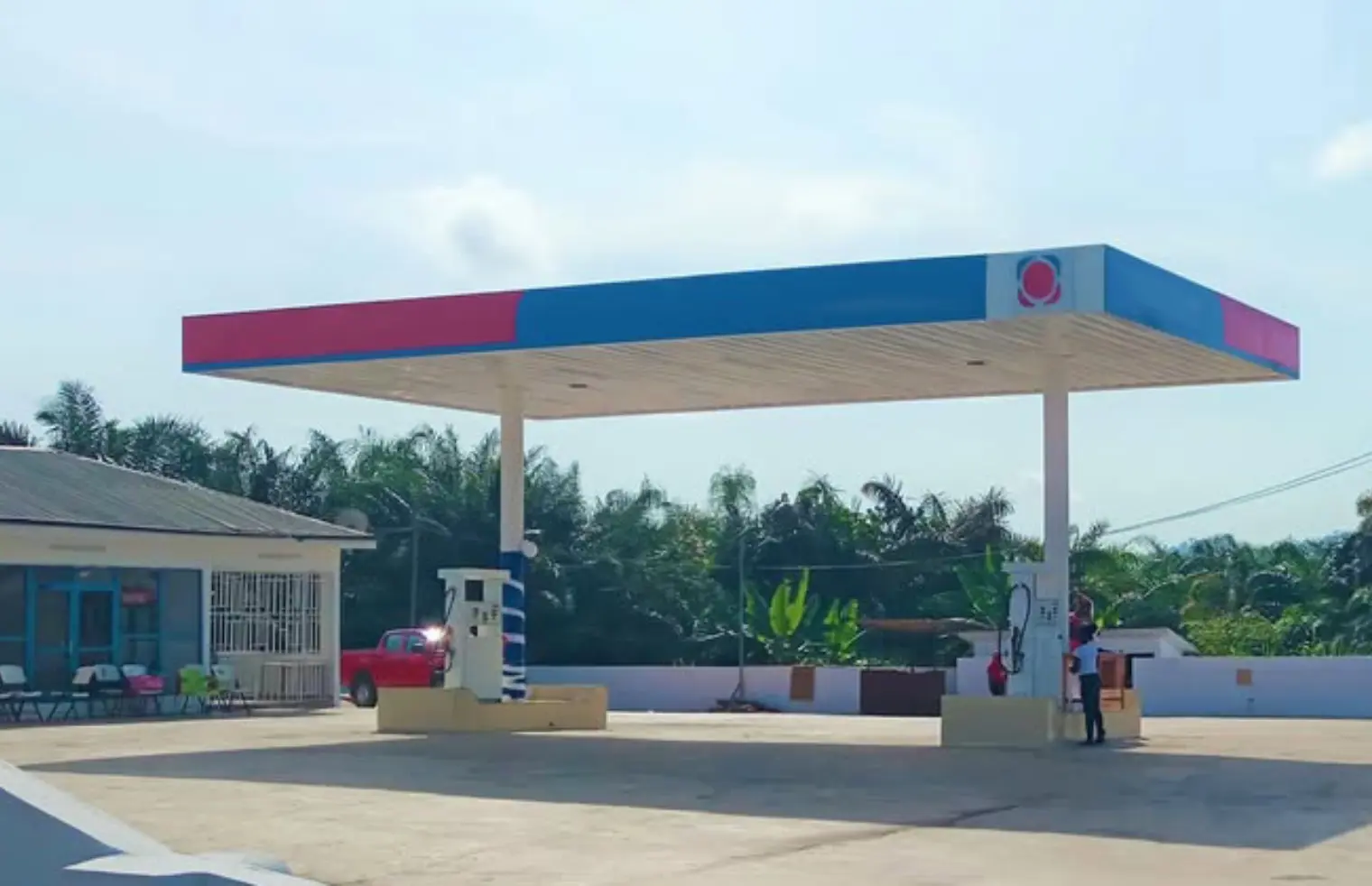
The company serves both corporate and retail customers and operates its own network of gas stations. The stations sell petrol and diesel fuel.
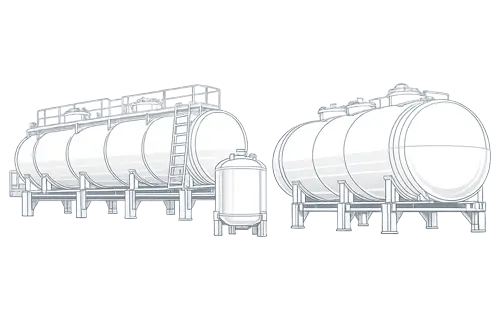
Each type of fuel is stored in a separate stationary cylindrical tank with a diameter of 2,500–3,000 mm and a capacity of 50,000–70,000 litres.
Stationary fuel storage tanks
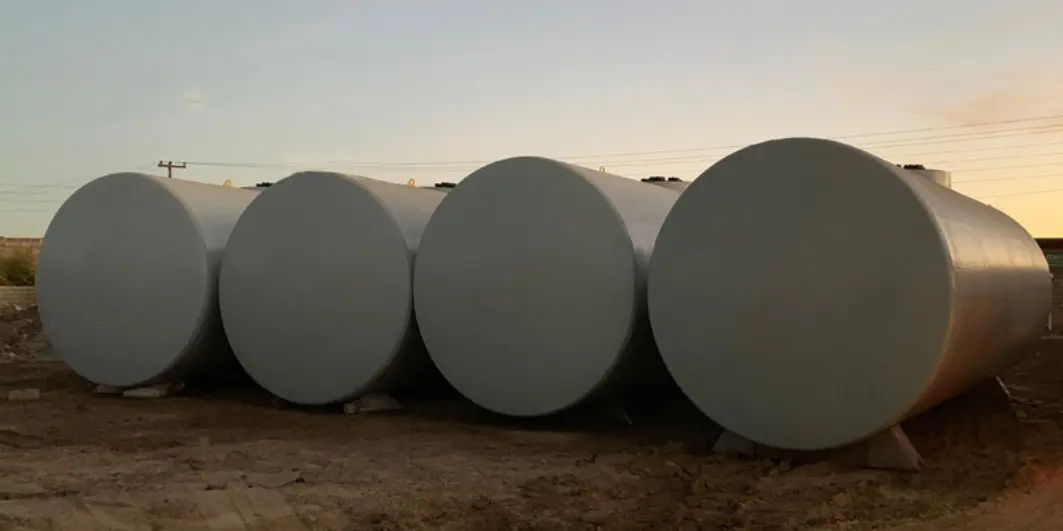
At gas stations, fuel is stored in stationary tanks. The tanks are manufactured at a specialised facility, delivered to the site and installed underground. This arrangement meets safety requirements by reducing the risk of fire and tank damage while protecting the fuel from overheating and sudden temperature changes.
The customer sells petrol and diesel fuel at its gas stations. Each type of fuel is stored in a separate tank. The tanks are cylindrical, with a diameter of 2,500–3,000 mm and a capacity of 50,000–70,000 litres.
Automating fuel inventory monitoring in stationary tanks at gas stations
Before the monitoring system was implemented, the fuel level in the tanks was measured manually using a dipstick. The operator opened the access hatch, lowered the dipstick to the bottom of the tank and determined the fuel level from the wet mark on the scale.
The operator also measured the fuel temperature, recorded the readings manually in a logbook and calculated the fuel volume using the tank calibration chart, taking the temperature correction into account.
This process required continuous personnel involvement and was time-consuming, especially at gas stations with several tanks. Errors could occur when reading the fuel level, recording the data and calculating the fuel volume.
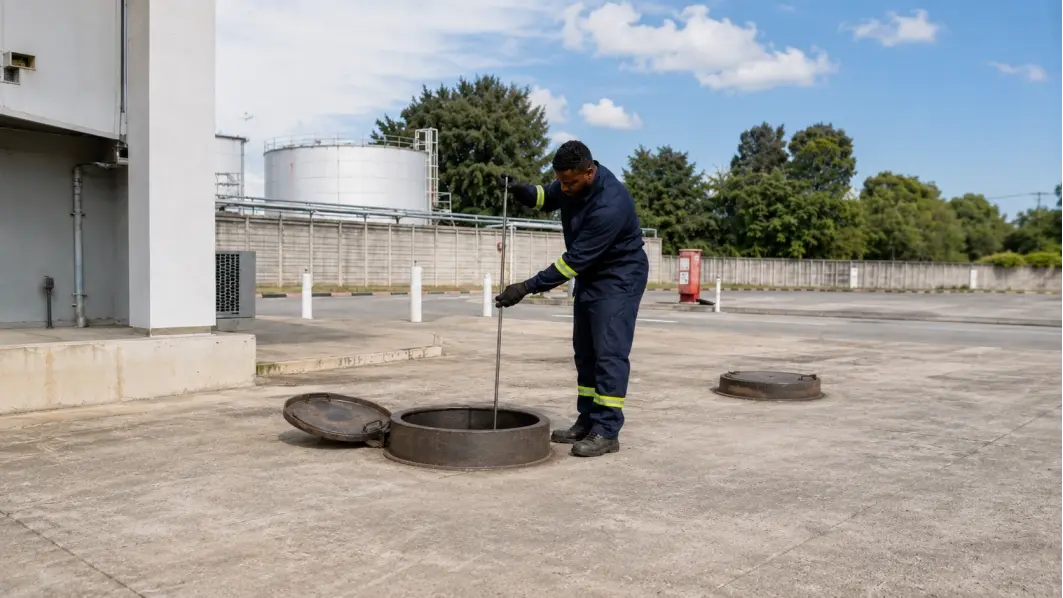
Fuel level measurement using a dipstick
- Automatically measure fuel level, volume and temperature in each tank
- Provide the dispatcher with real-time fuel inventory data
- Generate reports on fuel consumption from each tank for any period
- Enable local monitoring on a display without an internet connection
Wireless fuel monitoring with DUT-E 2Bio S7, MasterCAN Display and UNUM Genset
Each stationary tank is equipped with a wireless DUT-E 2Bio S7 fuel level sensor.
The sensor automatically measures fuel level, volume and temperature.
The relative fuel level measurement error is only 0.1–0.2%.
The explosion-proof design is confirmed by international IECEx certification, allowing the sensors to be used for fuel monitoring in potentially explosive atmospheres.
Data is transmitted via Bluetooth over a distance of up to 50 m without cabling. The S7 Radiobox CAN converter sends the readings to MasterCAN Display.
The operator can view the fuel level, volume and temperature in each tank.
The operator can switch between screens and monitor the fuel inventory at the gas station even when no internet connection is available.
The CANUp telematics gateway sends the data to the UNUM Genset cloud monitoring system.
The dispatcher monitors fuel level, volume and temperature in the tanks in real time and receives up-to-date fuel inventory data for each gas station.
UNUM Genset stores historical readings and generates reports on fuel dispensed from each tank over a selected period.
Monitoring system components
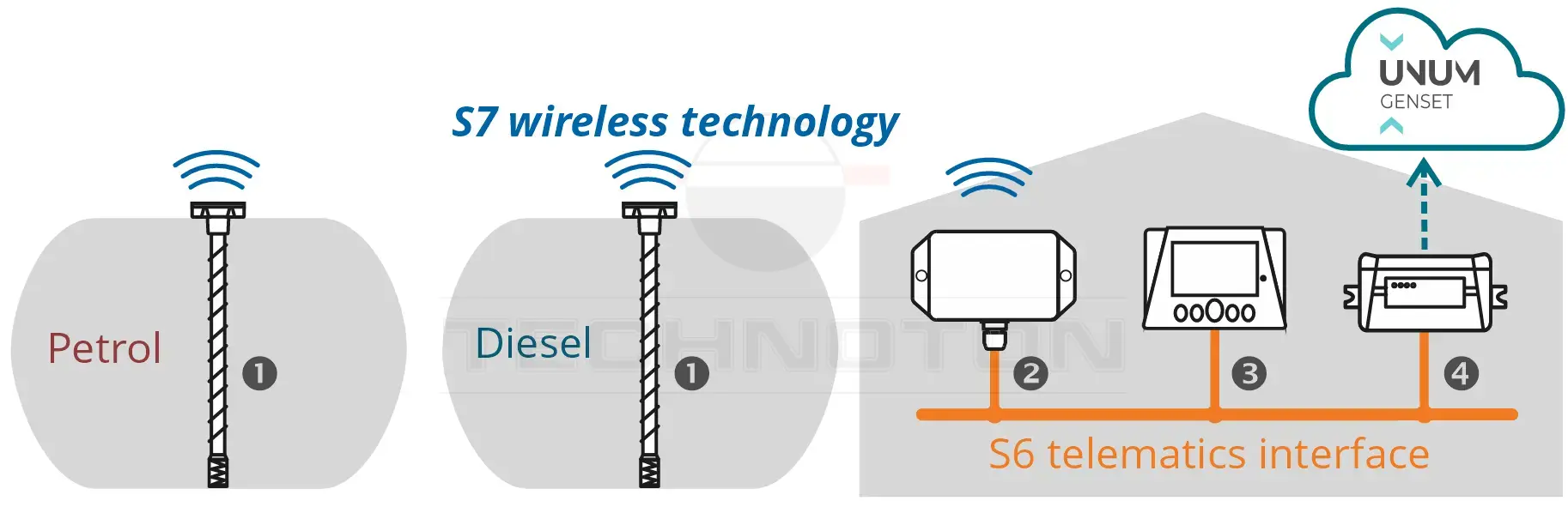
Monitoring system components
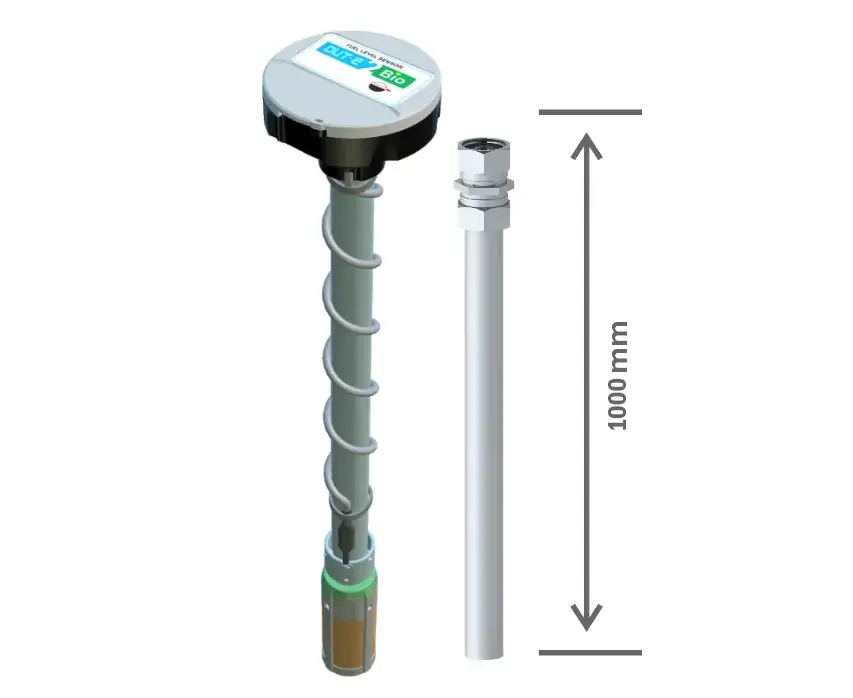
DUT-E 2Bio S7 sensor and extension section
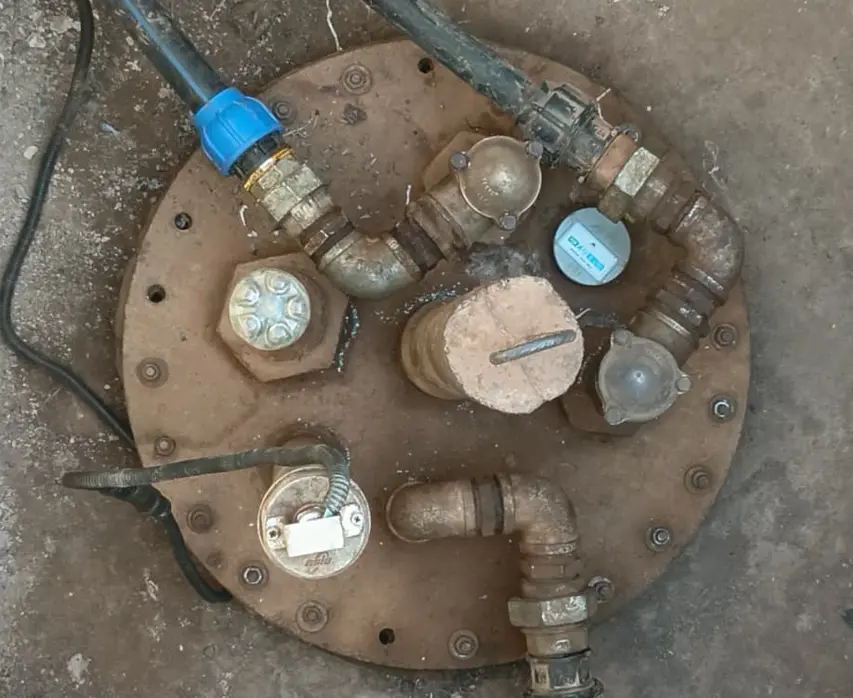
DUT-E 2Bio S7 installed in a stationary fuel tank
Local and remote monitoring of fuel in stationary tanks at gas stations
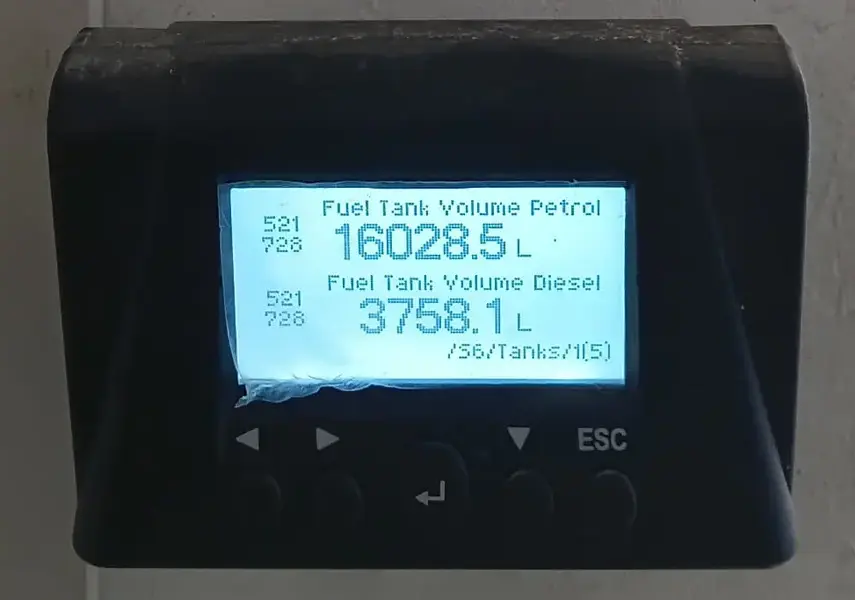 Enlarge
 Fuel data on MasterCAN Display without an internet connection
 Enlarge
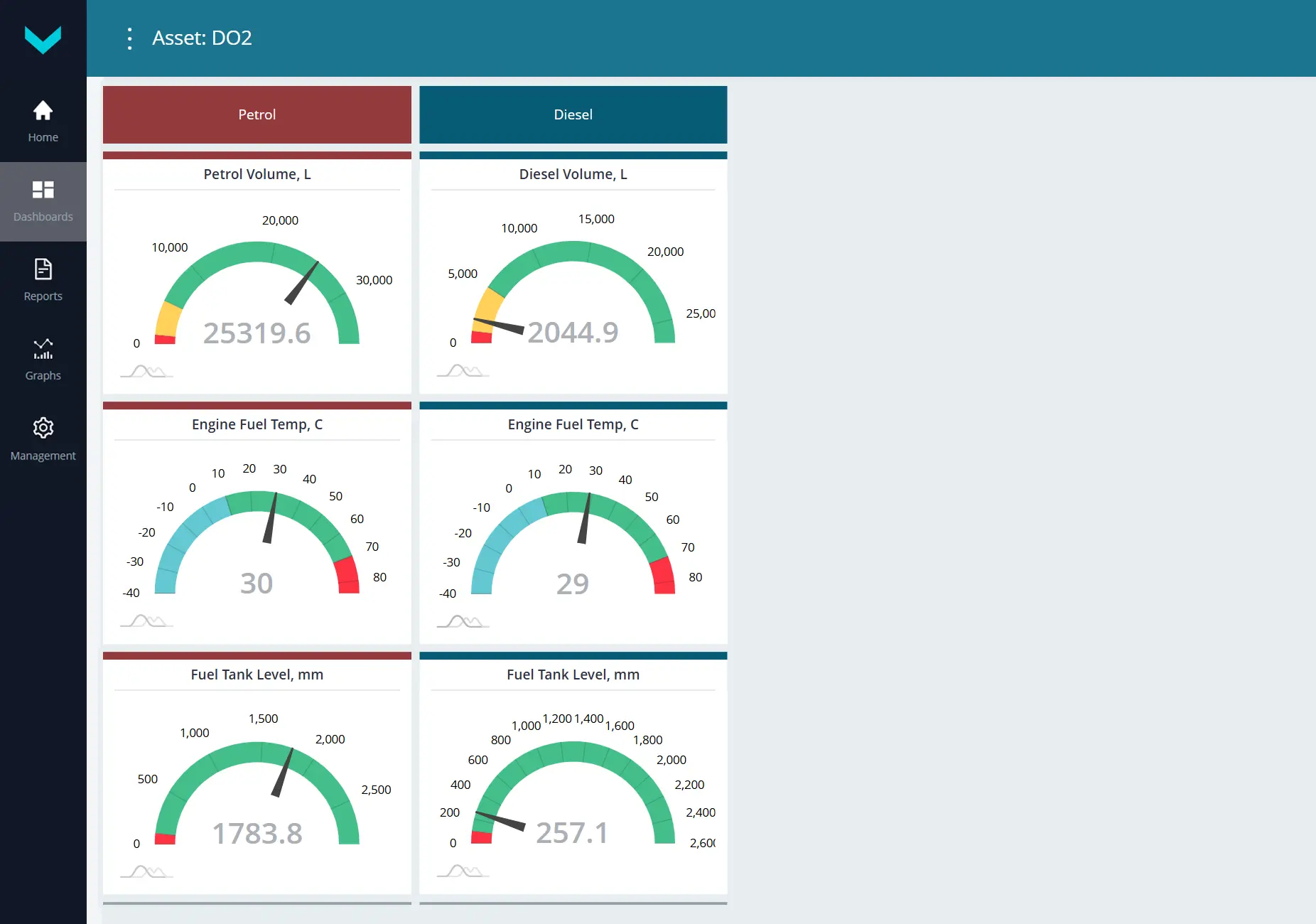
 Fuel inventory and temperature data in the UNUM Genset monitoring system
 Enlarge
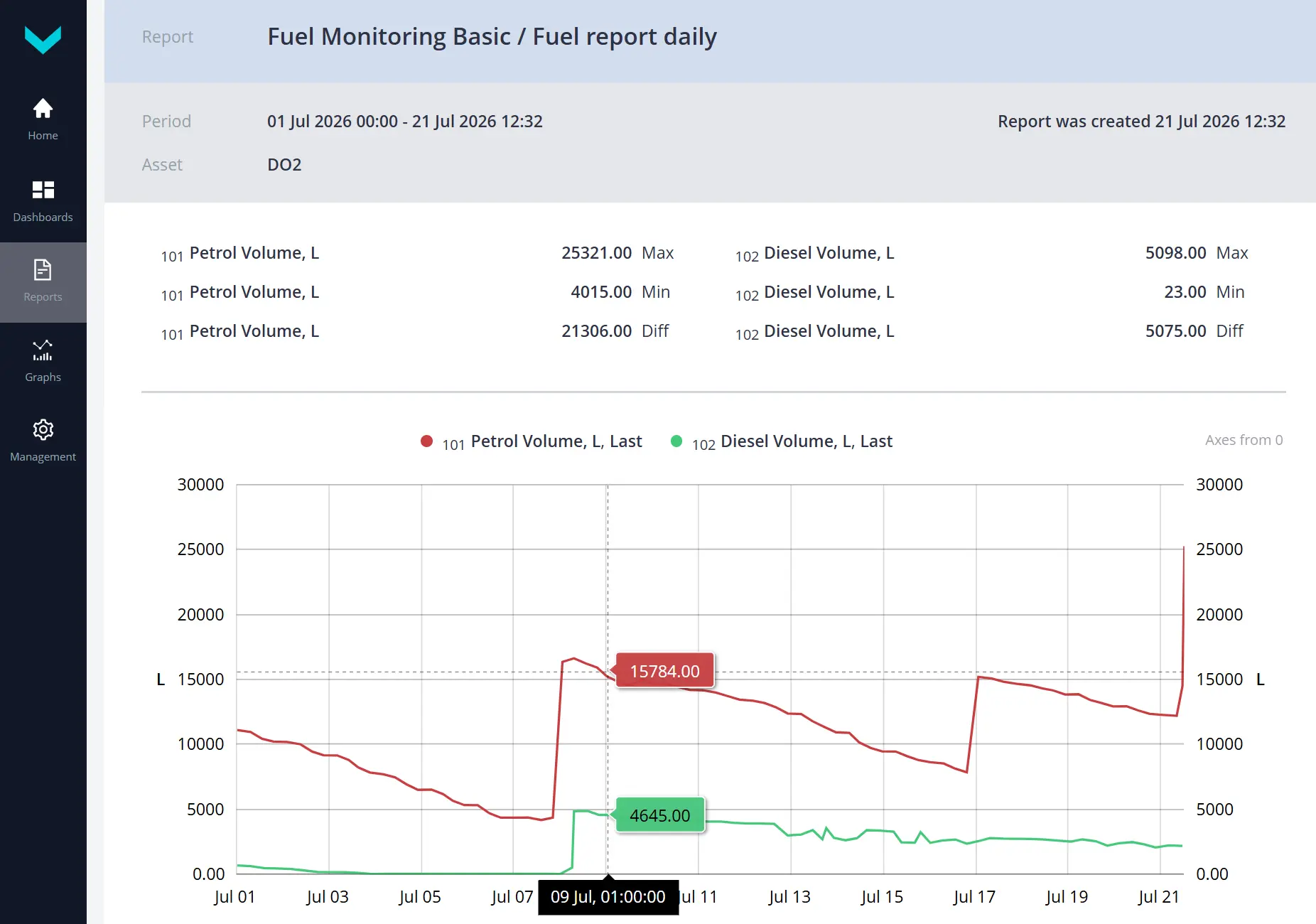
 Petrol and diesel fuel volume report in the UNUM Genset monitoring system

“The customer needed to monitor fuel at gas stations equipped with several diesel and petrol storage tanks.
One of the key requirements was local monitoring on a display without an internet connection.
We proposed using MasterCAN Display. The display connects via the CAN J1939/S6 interface and shows all essential data, including fuel level, volume and temperature. The operator can quickly switch between screens and monitor fuel in each tank.”
Need a fuel monitoring system for stationary tanks at gas stations?
We will select a solution for automatic monitoring of fuel level, volume,
temperature and consumption in stationary tanks up to 6 metres high.
Automated fuel inventory accounting at gas stations
The customer automated fuel inventory accounting at its gas stations. Fuel level, volume and temperature are now measured automatically, without using a dipstick or processing readings manually.
The operator monitors fuel locally on a display without an internet connection, while the dispatcher receives remote data from each tank through the UNUM Genset monitoring system.
The number of routine operations has been reduced, along with the risk of errors during measurement, data recording and fuel volume calculation.
The system has been installed at 30 gas stations. The customer plans to equip the entire network of more than 100 gas stations in the future.

- Measurement accuracy. The relative fuel level measurement error is only 0.1–0.2%. When the type of fuel stored in the tank changes, the same accuracy is maintained without recalibrating the sensor.
- International IECEx explosion protection certification. The equipment is safe for petrol level monitoring and can be used in potentially explosive atmospheres.
- Remote monitoring and offline operation. The onboard equipment and cloud software are supplied by a single manufacturer, providing both remote monitoring and local control without an internet connection.”
Frequently asked questions about monitoring fuel in stationary tanks at gas stations
How can fuel monitoring in stationary tanks at gas stations be automated?
Each tank is equipped with a wireless DUT-E 2Bio S7 fuel level sensor. It automatically measures fuel level, volume and temperature. The data is transmitted to MasterCAN Display for local monitoring and to the UNUM Genset monitoring system.
Which fuel parameters does the system monitor?
The system displays fuel level in millimetres, actual fuel volume in litres and fuel temperature. Data is available separately for each stationary tank.
Can fuel be monitored without an internet connection?
Yes. MasterCAN Display shows fuel level, volume and temperature directly at the gas station. The operator can switch between screens and monitor each tank even when no internet connection is available.
Can fuel inventory at several gas stations be monitored remotely?
Yes. The CANUp telematics gateway sends the data to UNUM Genset. The dispatcher can view the current fuel inventory at each gas station in real time and generate reports on fuel movement over a selected period.
Is DUT-E 2Bio S7 suitable for both petrol and diesel fuel?
Yes. DUT-E 2Bio S7 measures the level of both petrol and diesel fuel. Its third measuring electrode detects changes in the dielectric permittivity of the fuel and automatically corrects the readings.
Does the sensor need to be recalibrated when the fuel type changes?
No. When the fuel type changes, DUT-E 2Bio S7 automatically corrects the measurement results. The sensor does not need to be recalibrated when switching from petrol to diesel fuel or vice versa.
What is the fuel level measurement accuracy?
In this project, the relative fuel level measurement error is 0.1–0.2%. The same high accuracy is maintained when the type of fuel stored in the tank changes.
Is cabling required between the tanks and the monitoring equipment?
No. DUT-E 2Bio S7 transmits data via Bluetooth over a distance of up to 50 m. The S7 Radiobox CAN converter receives data from the sensors and converts it into CAN J1939 messages for transmission to MasterCAN Display and the CANUp telematics gateway.
Can DUT-E 2Bio S7 be used in potentially explosive atmospheres?
Yes. DUT-E 2Bio S7 is available in an explosion-proof version and is suitable for monitoring petrol and diesel fuel levels in stationary tanks at gas stations. Its explosion-proof design is confirmed by international IECEx certification.