

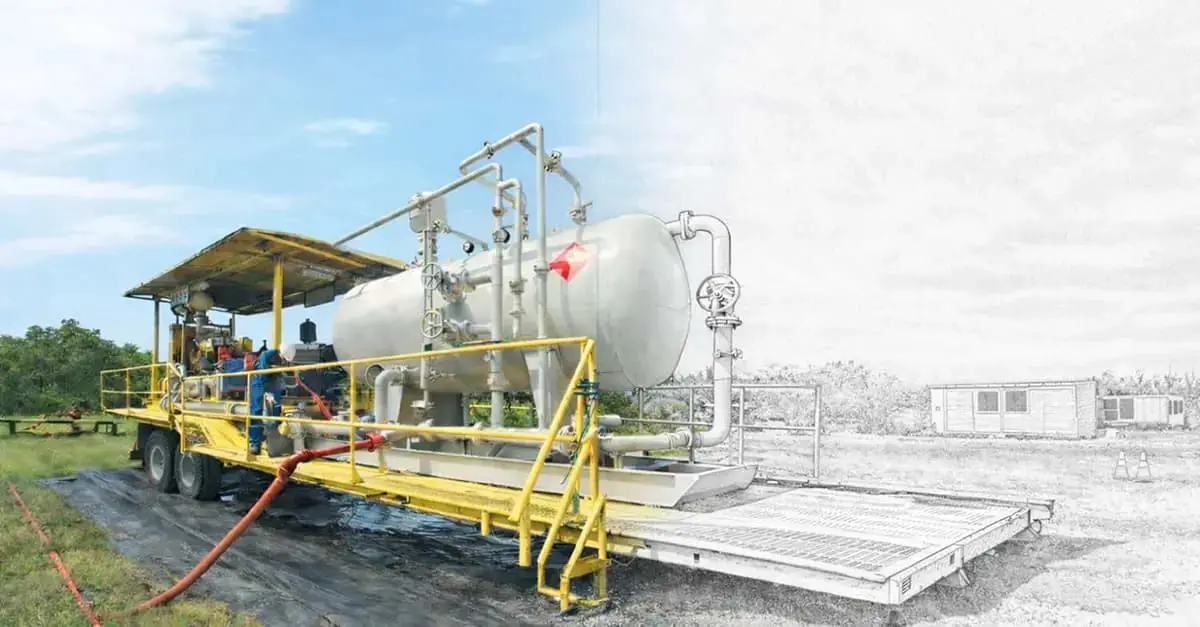
Fuel Monitoring for Mobile Testing Units in Ecuador
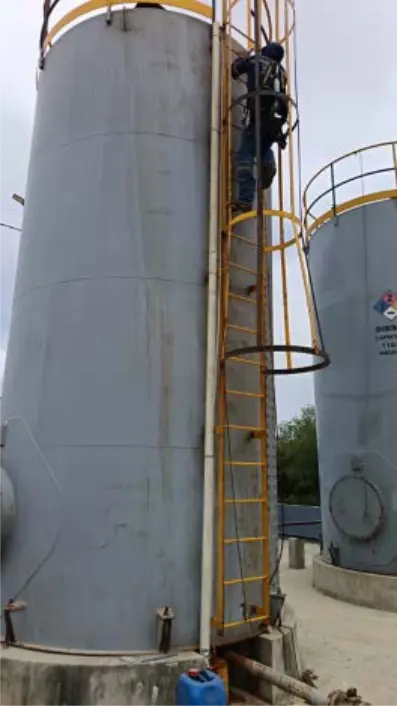
- Personnel had to climb onto 3-meter-high tanks to measure fuel levels
- Fuel consumption was calculated based on standard rates, so actual losses remained invisible
- Data was entered into the accounting system manually — a slow and inefficient process
- Fuel level and consumption data are available online — no site rounds, no climbing onto tanks
- Actual fuel consumption is measured by the fuel flow meter — every liter is accounted for
- API integration with the accounting system has been set up — fuel level and consumption data are transferred automatically, without manual input
Energy Company in the Oil and Gas Industry
An international company based in Ecuador that specializes in integrated energy solutions for the oil & gas, mining, and power industries. The company develops and deploys proprietary technologies and equipment, including solutions to monitor and optimize oil well operations.
The company operates in 27 countries and employs 1,000 people. It uses 250 mobile MTU units to assess reserves and extract oil from wells in geologically complex formations.
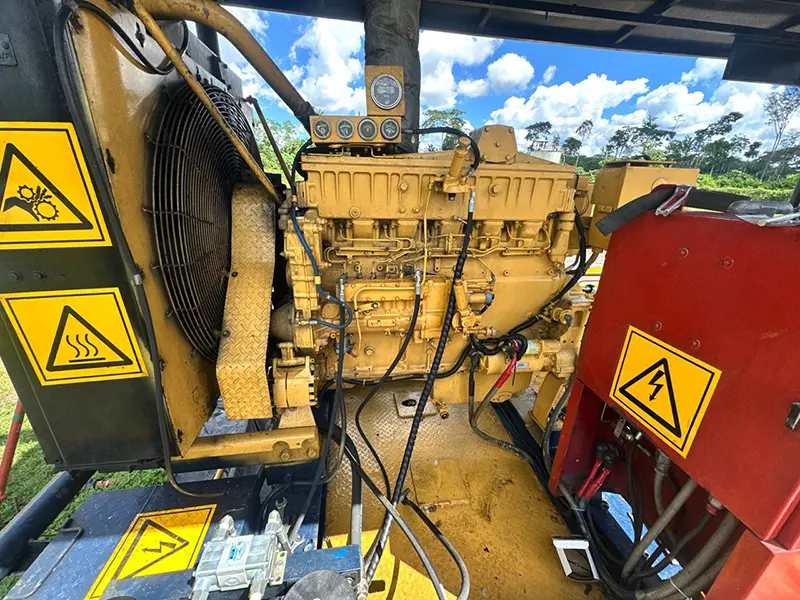
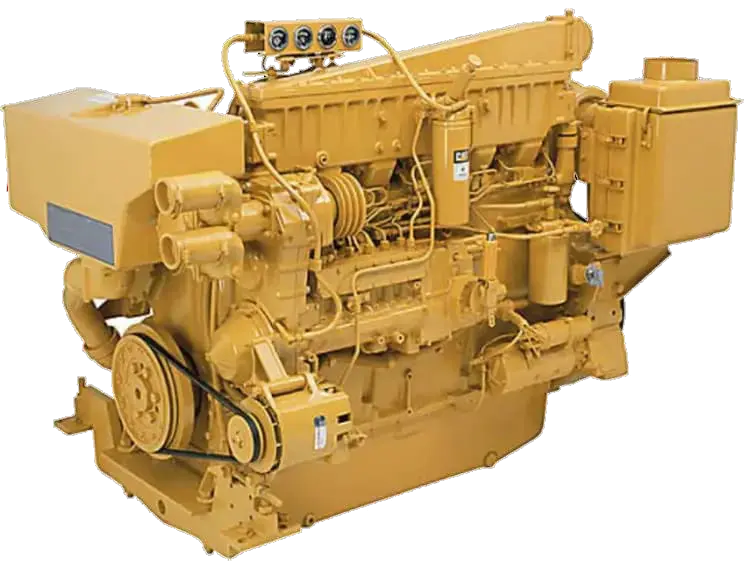
Mobile Oilfield Units with CAT Engine
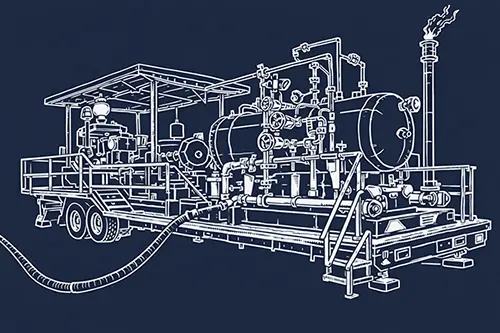
The units are mounted on a chassis for rapid deployment. Each unit includes a pump for extracting fluid from the well, a separator for separating oil, gas, and water, shut-off valves, pressure and temperature sensors, and a control unit.
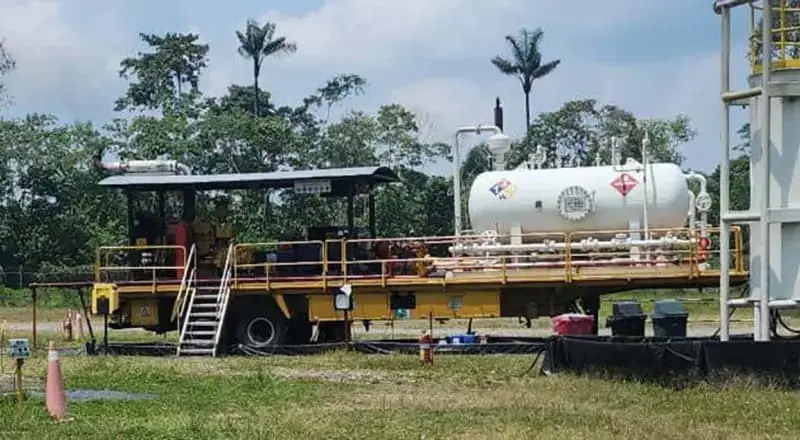
Remote Fuel Monitoring for Oilfield Units
Fuel is supplied to the unit’s engine from an integrated fuel tank. As the tank is depleted, it is refilled from an external storage tank with a height of 3,000 mm and a capacity of 3,000 liters. Fuel volume in all tanks is monitored manually.
Actual engine fuel consumption is not tracked.Fuel costs are calculated based on standard norms that do not reflect real operating conditions. Fuel consumption data is manually entered into accounting systems, making the process time-consuming and inefficient.
- Accurate fuel level control in tanks and storage units
- Online monitoring of engine fuel consumption
- Data export to accounting and management software
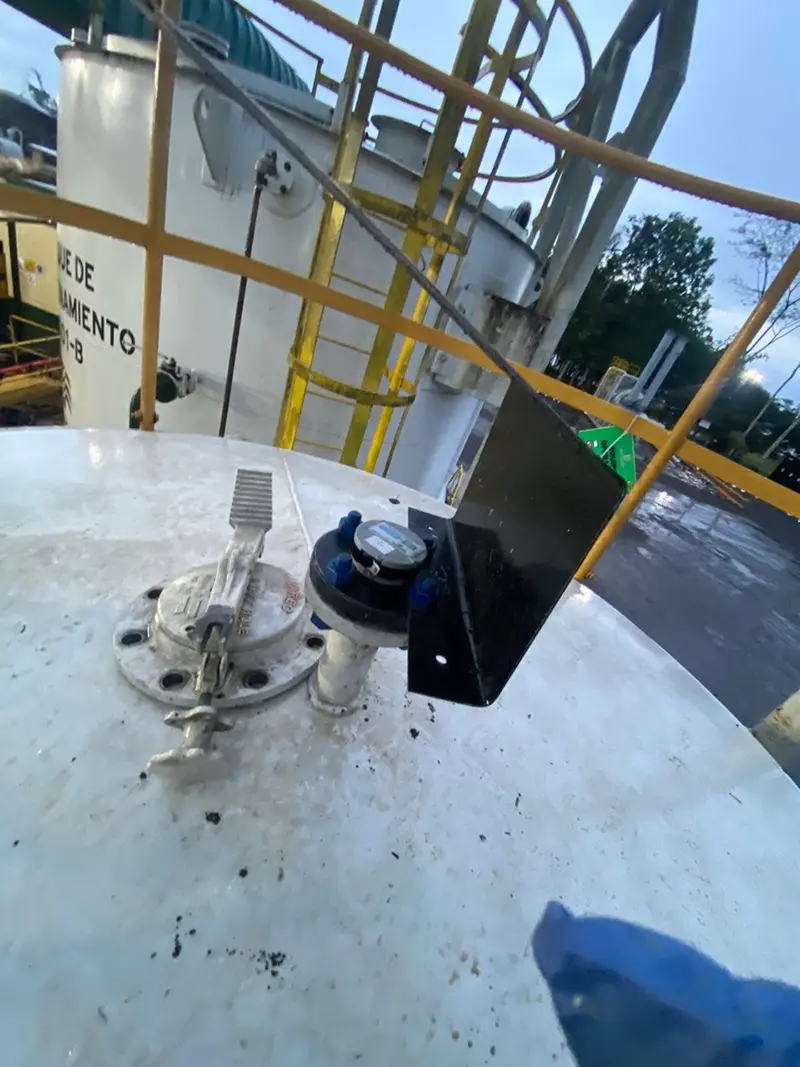
Autonomous Fuel Tank and Engine Fuel Consumption Monitoring System
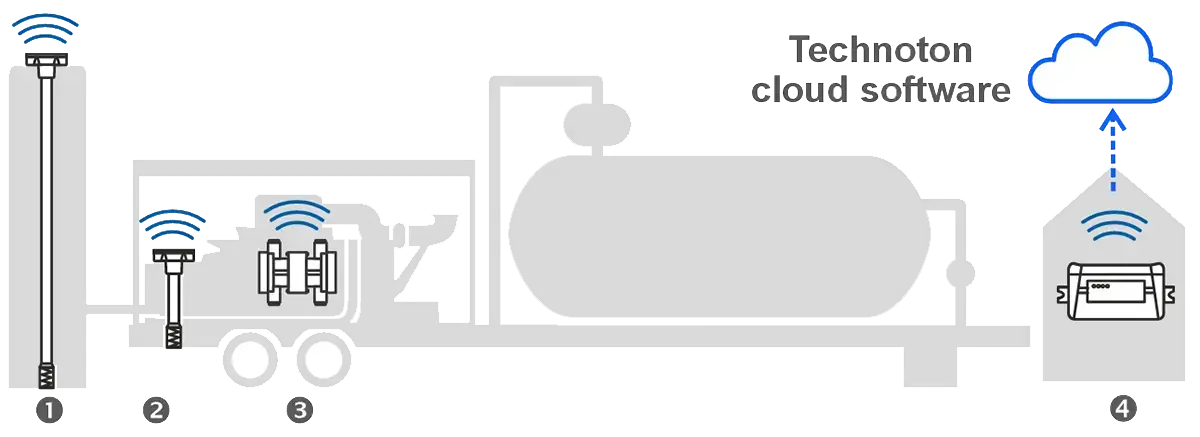
The fuel level sensors and fuel flow meters operate via Bluetooth at a range of up to 50 m. There is no need to run power or communication cables — the CANUp gateway receives the data and sends it to the cloud.
The sensors are powered by built-in batteries, while the CANUp gateway is powered by a solar panel. No external power source is required.
Fuel consumption and fuel level charts are available in Technoton’s cloud software. The data can be exported via API to accounting and management systems.
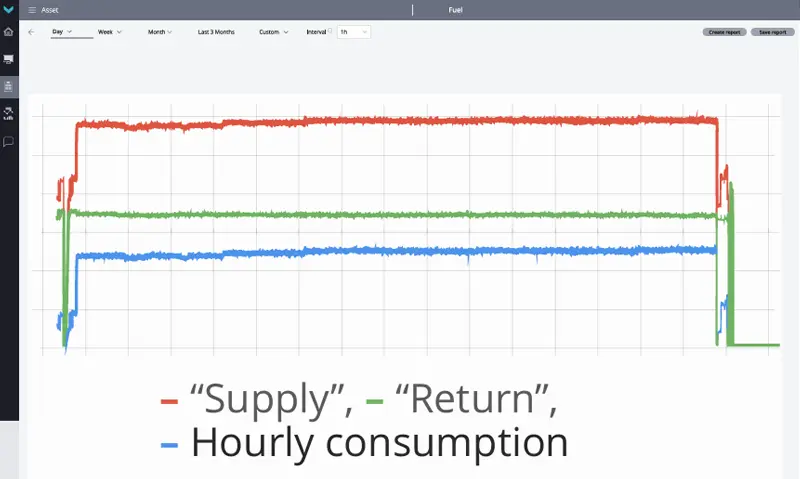 4-day fuel consumption report
(Technoton cloud platform)
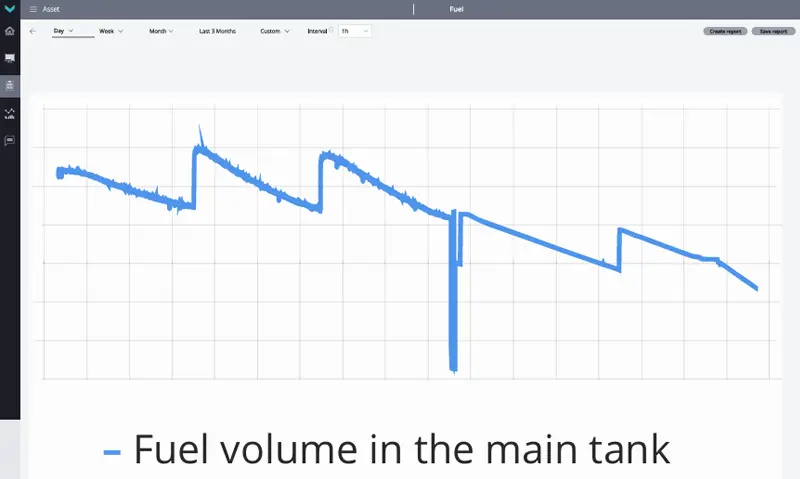 4-day fuel volume report
(Technoton cloud platform)

“Technoton’s partners in Ecuador have been working with oil and gas companies for many years and clearly understand the challenges of delivering and installing equipment in remote rainforest areas. That is why a wireless solution was selected.
An additional advantage was the ease of transportation and installation of the fuel level sensors: they are supplied in 1,000 mm sections with optional extensions of the same length. On site, the sensors can be assembled to a total length of up to 3,000 mm, significantly simplifying logistics and installation.”
Need a fuel monitoring system for your site?
Get a QuoteAccurate accounting for every liter
of fuel and dozens of hours saved each month
After the equipment is installed, the client gains real-time online access to all data. Required reports are generated in minutes, saving dozens of hours of manual work every month.
The system is fully autonomous: the sensors operate on batteries, and the gateway is powered by a solar panel. Real-time monitoring makes it possible to significantly improve fuel efficiency.
Integration with accounting systems via API automates internal processes and simplifies reporting and cost planning.
The system has been deployed on 12 MTU units. Installation on the remaining 238 units operated by the company is planned.

- Full fuel control Any deviations are detected immediately and verified during operation.
- Less manual work means fewer errors. Personnel no longer need to climb four-meter-high fuel tanks – fuel data is collected automatically, safely, and accurately.
- Reliability in real-world conditions. The solution is designed for continuous operation in harsh environments and has proven its effectiveness when equipment is moved between oil production sites.”
Frequently Asked Questions About Fuel Monitoring on Oilfield Equipment
How does the wireless fuel monitoring system work?
DUT-E S7 fuel level sensors and DFM D S7 fuel flow meters transmit data via Bluetooth over distances of up to 50 meters. The CANUp telematics gateway receives the signal and sends the information to the Technoton cloud platform. The system does not require power or communication cables.
How are the sensors and gateway powered?
The fuel level sensors and fuel flow meters are powered by built-in batteries. The CANUp telematics gateway is powered by a solar panel. The system is fully autonomous and does not require an external power supply.
Can a fuel level sensor be installed in a tall tank?
Yes. DUT-E S7 sensors are supplied in 1,000 mm sections and can be equipped with additional extension tubes. On site, they can be extended to 3,000 mm and beyond. This makes logistics easier, as the sections are compact during transport and assembled directly during installation.
How is fuel consumption data transferred to the accounting system?
The Technoton cloud platform provides an API for integration with accounting and management systems. Data is exported automatically, eliminating manual entry and the errors associated with it.
Can the equipment withstand transportation between oil production sites?
Technoton equipment is designed for continuous operation in harsh environments. In this project, the system proved reliable during regular transportation between oil production sites in Ecuador’s tropical climate, including exposure to vibration during transport and high humidity.
How quickly does a fuel monitoring system pay for itself?
The payback comes from two factors. First, labor savings: in this project, automated reporting saves dozens of hours of manual work every month. Second, the detection of abnormal fuel consumption: the system identifies overconsumption and irregular events as soon as they occur, helping prevent losses. The exact payback period depends on fleet size and fuel costs — request a calculation from Technoton.