
Telematics for Petroleum Product Transportation: Fuel Monitoring in Tanker Truck Compartments
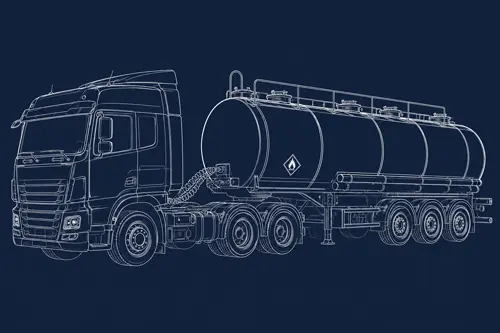
from tanker compartments
- Fuel level is measured manually using a dipstick
- The dispatcher cannot see the fuel volume in the tanker during transit
- High measurement error caused by tank tilt and fuel temperature changes
- Fuel theft cannot be detected
- Automatic fuel level measurement in tanker compartments with DUT-E 2Bio S7 sensors
- Accurate monitoring of fuel loading and unloading volumes for each tanker truck
- Online monitoring of the remaining fuel volume in each tanker compartment
- Fuel theft during transportation has been eliminated
Ministry of Petroleum of Sudan
The customer is an oil company engaged in the import and distribution of petroleum products and owned by the Ministry of Petroleum of Sudan.
The company operates a network of gas station and a fleet of tanker trucks used to deliver gasoline and diesel fuel. Its primary role is to ensure a reliable fuel supply to remote regions of the country.
Fuel is transported by tanker trucks. Each tractor unit tows one or two tanker trailers with a capacity of up to 45,000 litres each.
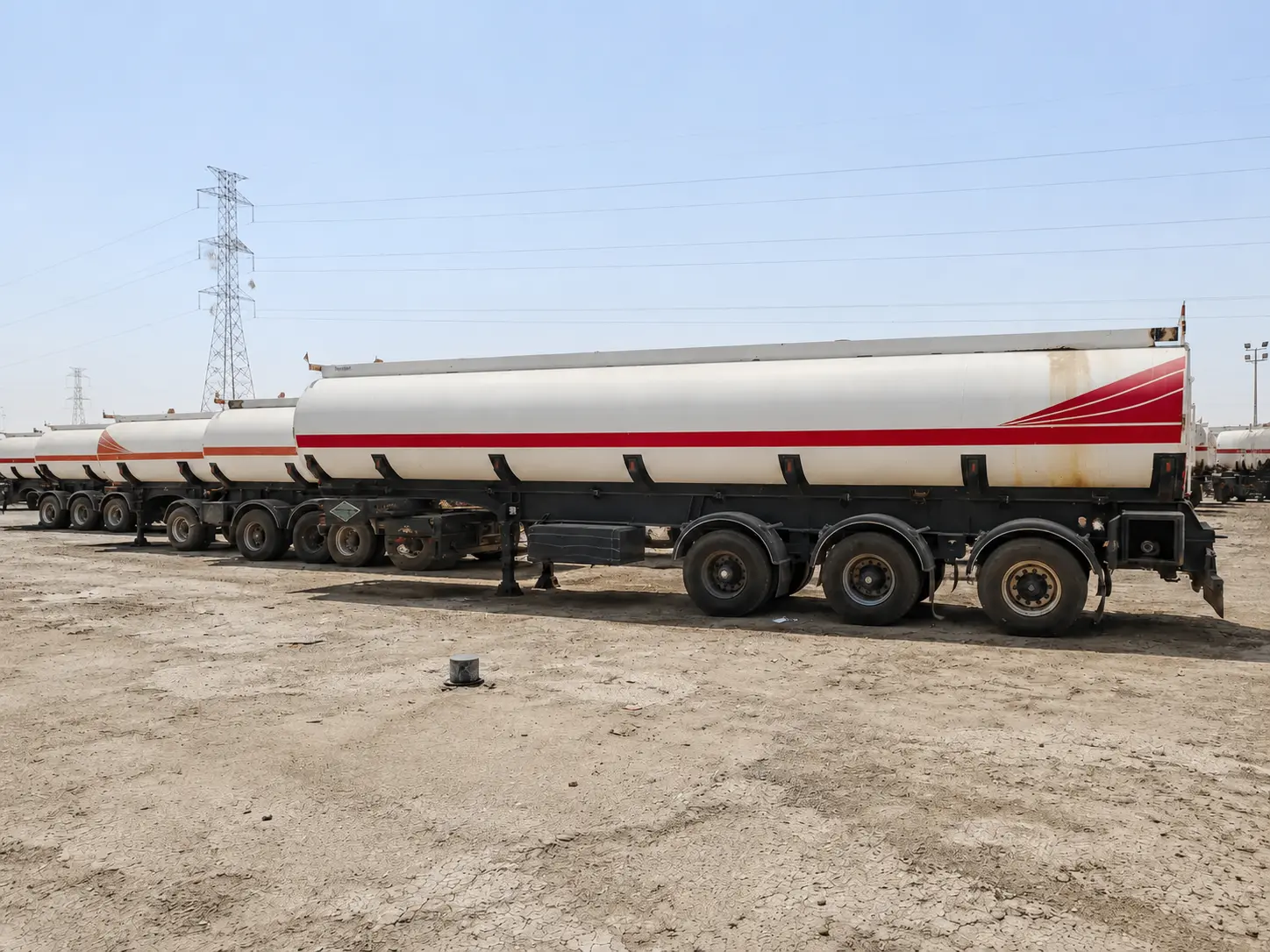
Tanker trucks with capacities of up to 45,000 litres
Gasoline and diesel fuel are delivered by road tankers based on 6×4 tractor units. Each tractor unit tows one or two fuel tanker trailers, each with a capacity ranging from 22,000 to 45,000 litres.
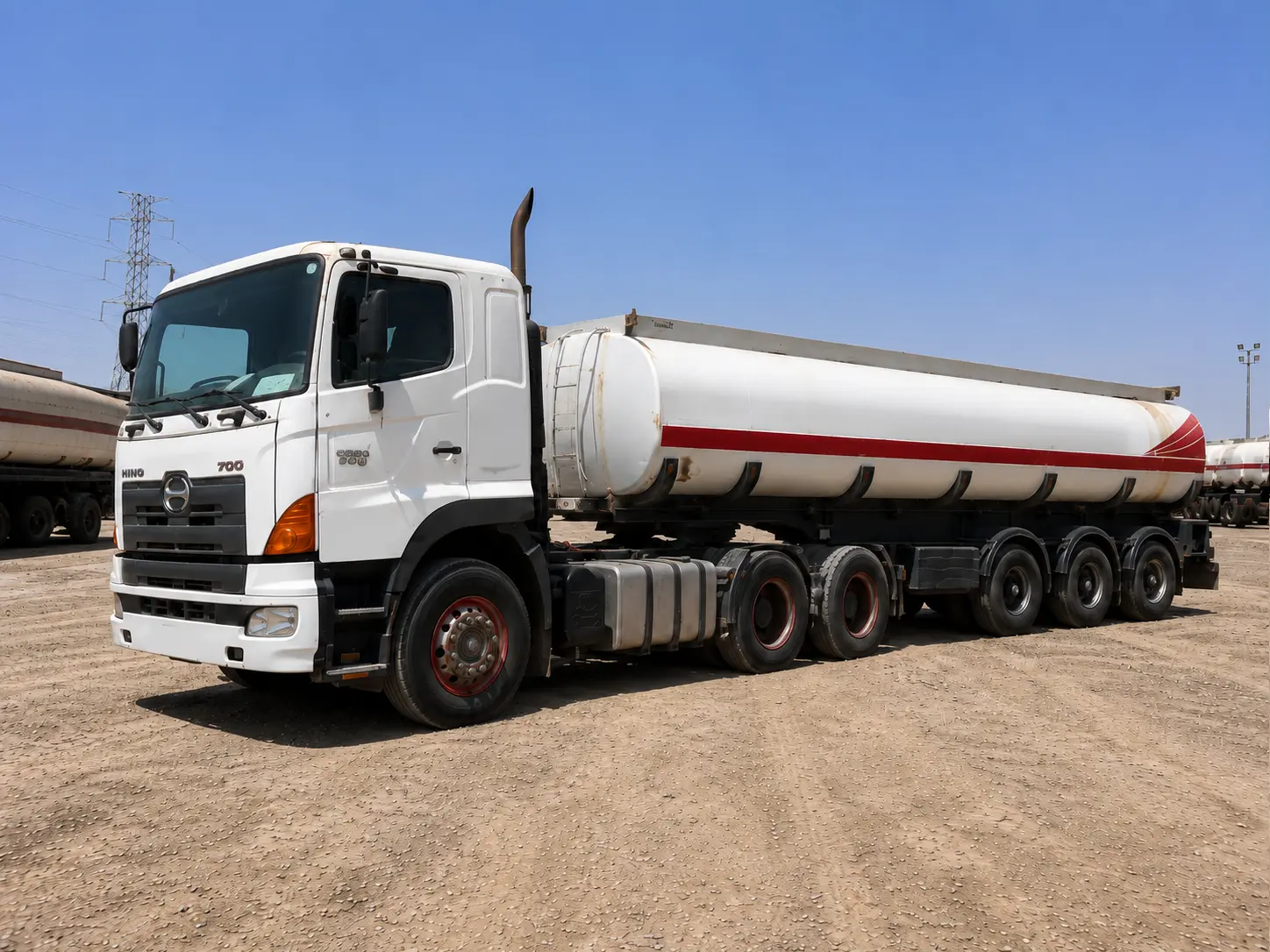
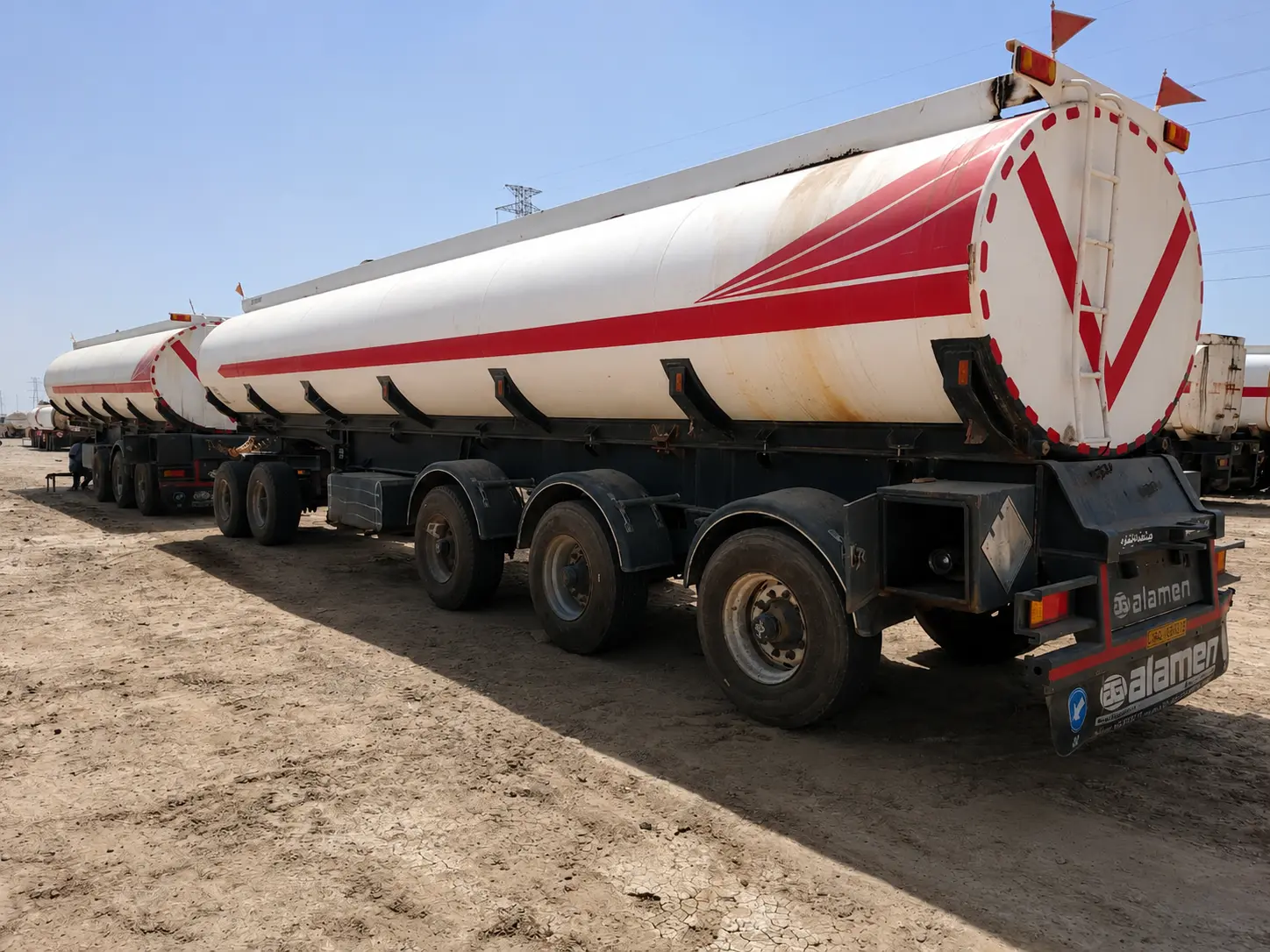
Fuel monitoring in tanker truck compartments during transportation
Before the monitoring system was implemented, the fuel volume during tanker loading and unloading at the delivery point was measured using a dipstick.
This is a manual measurement method: the driver or operator opens the tanker hatch, lowers the dipstick into the compartment and determines the fuel level from its graduated markings.
The measurement process was time-consuming, while its accuracy depended on operating conditions, including tanker tilt, thermal expansion of the fuel and human error.
During transportation, the dispatcher could not see the current fuel volume in the tanker and was unable to promptly detect unauthorized unloading or fuel theft.
- Accurately monitor fuel volume during loading and unloading
- Transmit online data on fuel level, volume and temperature in each tanker compartment
- Automatically record fuel loading and unloading events, including those occurring in transit
- Help prevent fuel theft during transportation along remote routes
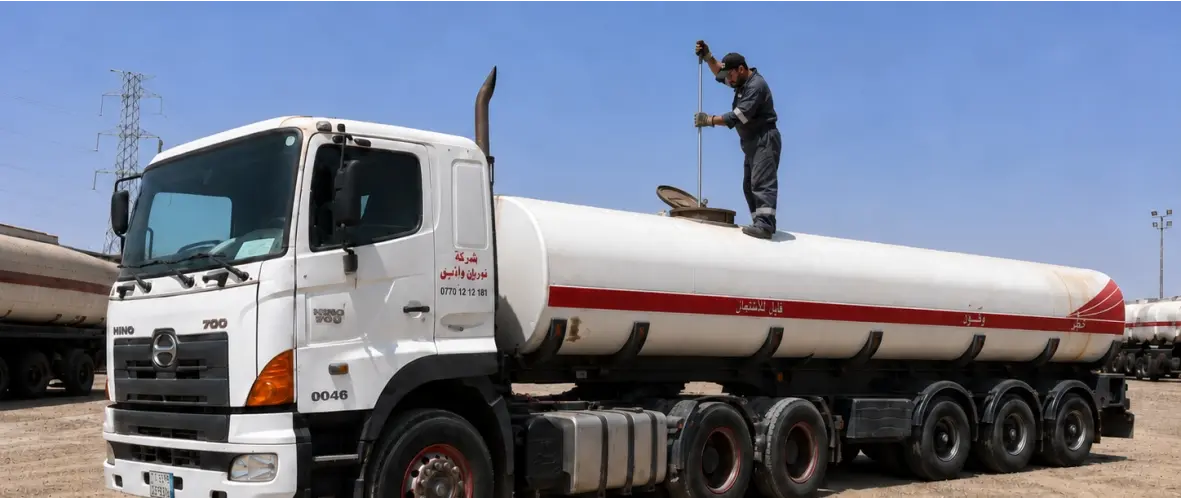
Fuel level measurement using a dipstick
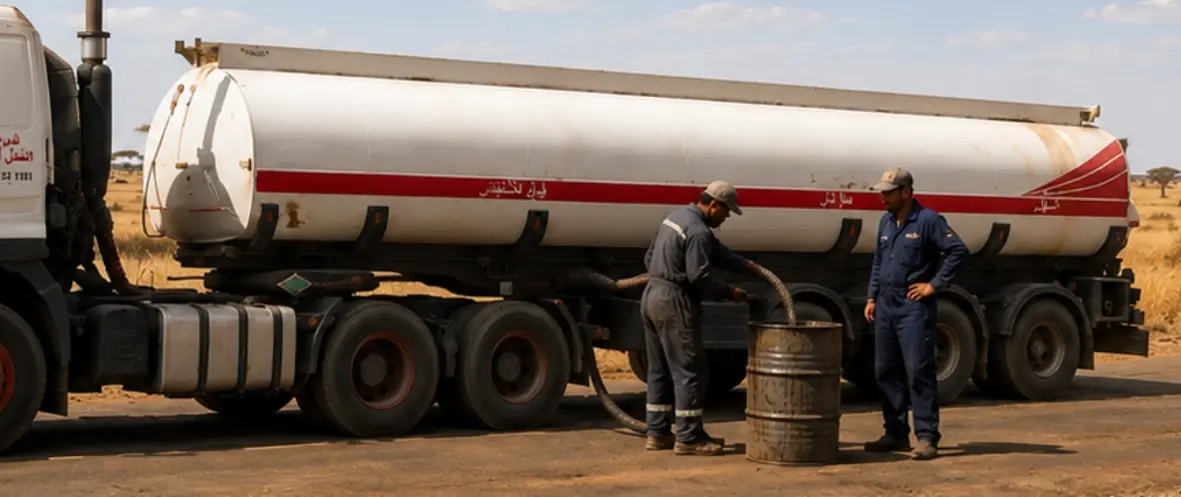
Fuel theft is possible in remote areas
DUT-E 2Bio S7 fuel level sensor in each tanker compartment
Wireless DUT-E 2Bio S7 fuel level sensors are installed in each tanker compartment.
The sensors measure fuel level, volume and temperature and transmit the data to the telematics service.
The fuel level measurement error of DUT-E 2Bio S7 is only ±1%.
DUT-E 2Bio S7 features a third electrode that detects changes in fuel type and automatically adjusts the readings.
The sensor is suitable for tanker compartments used to transport gasoline or diesel fuel on different trips.
The explosion-proof design of the sensors is confirmed by the international IECEx Certificate of Conformity.
The Teltonika telematics unit collects data from all sensors via Bluetooth and transmits it to the telematics service.
The customer can monitor the remaining fuel volume in each compartment, view fuel movement reports and receive alerts on fuel unloading events.
Monitoring system components
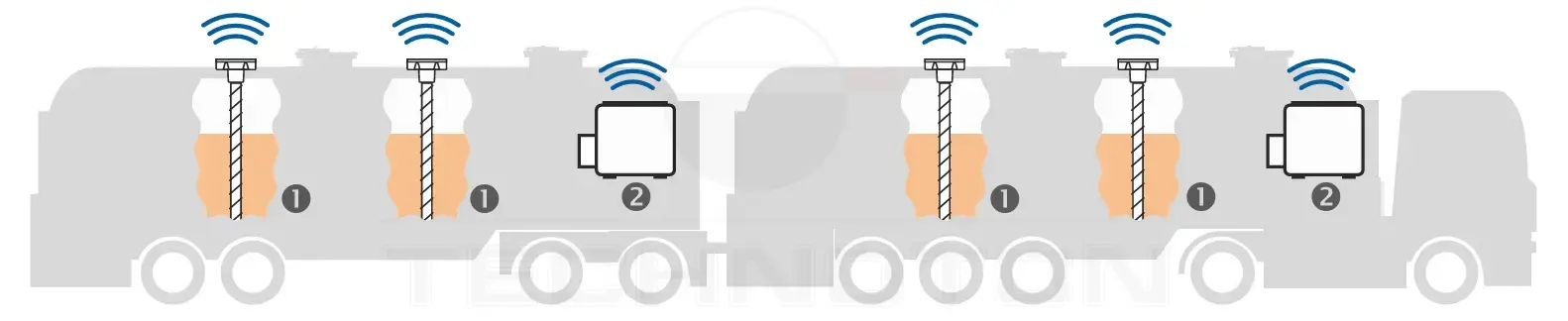
Monitoring system components
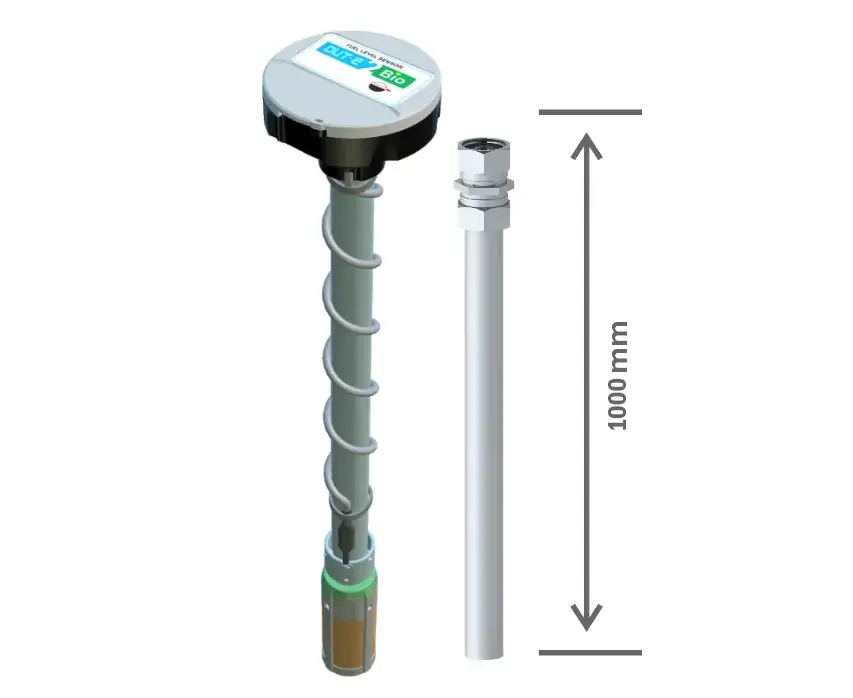
DUT-E 2Bio S7 sensor and extension section
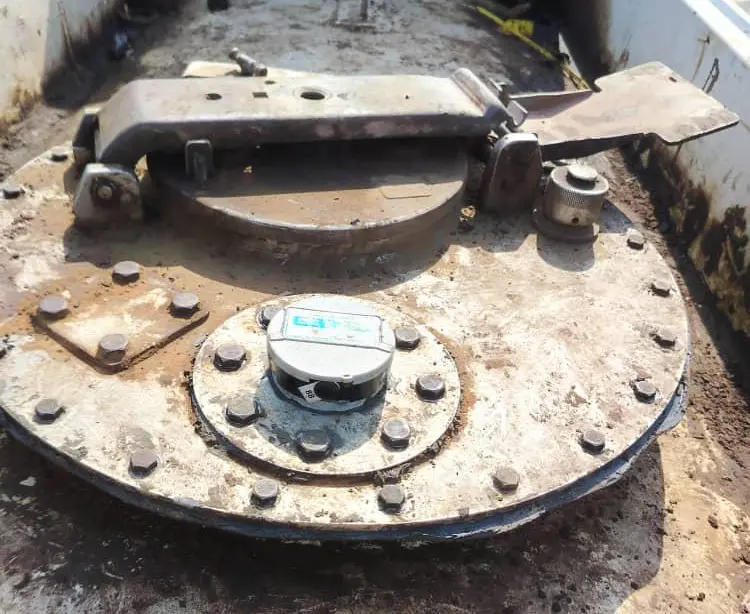
DUT-E 2Bio S7 sensor installed on a tanker compartment

“The customer’s key requirement was accurate fuel level monitoring in tanker compartments, including when the type of fuel in a compartment changes.
DUT-E 2Bio S7 sensors feature a third electrode that automatically corrects the readings when the fuel type changes. Unlike sensors from other manufacturers, the correction is performed after any volume of fuel is loaded, regardless of whether the compartment is partially or completely filled. Sensor recalibration is not required. The measurement accuracy fully meets the customer’s requirements.”
Need a fuel monitoring system for tanker trucks?
We will tailor a solution for monitoring fuel level, volume, loading and unloading events in each tanker compartment.
Get quoteFuel inventory monitoring and theft prevention during transportation
The Technoton fuel monitoring system has been installed on more than 100 tanker trailers. The customer gained accurate fuel accounting in each tanker compartment during loading, transportation and unloading.
Data is transmitted to the telematics service, allowing the customer to monitor the actual fuel volume throughout each trip. The system records fuel loading and unloading events and sends alerts when unloading is detected.
Fuel theft during transportation has been eliminated. The customer plans to install the system on its entire tanker truck fleet.

- High measurement accuracy. DUT-E 2Bio S7 sensors provide accurate fuel level and volume monitoring. Verification with a dipstick confirmed that the measurement error does not exceed 1%, even when the fuel in the tanker compartment changes from diesel fuel to gasoline or vice versa.
- Explosion protection and compatibility with different fuel types. The sensors are certified for use in explosive atmospheres and are suitable for measuring the level and volume of both diesel fuel and gasoline.”
Frequently asked questions about fuel monitoring in tanker truck compartments
How can fuel volume in a tanker truck be monitored during transportation?
A wireless DUT-E 2Bio S7 differential fuel level sensor is installed in each tanker compartment. It measures fuel level, volume and temperature. The data is transmitted via S7 Technology to the telematics unit and then to the telematics service. The dispatcher can monitor the actual fuel volume in each compartment online, without manual dipstick measurements.
Can unauthorized fuel unloading be detected in transit?
Yes. The monitoring system records changes in the fuel volume inside the tanker and detects loading, unloading and suspicious events during transportation. Responsible personnel receive alerts, while fuel movement reports show where, when and by how much the fuel volume changed.
Is DUT-E 2Bio S7 suitable for gasoline and diesel fuel?
Yes. DUT-E 2Bio S7 is designed for applications where the fuel composition may change. Its third measuring electrode detects changes in the dielectric permittivity of the fuel, allowing the sensor to automatically correct its readings when switching from diesel fuel to gasoline or vice versa.
Does the sensor need to be recalibrated when the fuel type in a compartment changes?
No. When the fuel type changes, DUT-E 2Bio S7 automatically applies a correction to the measurements. In this project, verification with a dipstick confirmed that the measurement error did not exceed 1%, even when the fuel in the tanker compartment changed from diesel fuel to gasoline or vice versa.
Are cables required between the sensors and the telematics unit?
No. DUT-E 2Bio S7 transmits data via Bluetooth Low Energy as part of S7 Technology. This simplifies installation on tanker trucks with one or two tanker trailers, as no cable is required between each sensor and the telematics unit. The data can be received by a telematics unit, smartphone or another compatible device.
Can the sensor be installed in a high tanker compartment?
Yes. The measuring part of DUT-E 2Bio S7 can be extended with additional sections to match the height of a specific tanker compartment. In this project, 1,000 mm extension sections were used, simplifying sensor transportation and on-site installation.
Are the sensors explosion-protected for use in fuel tankers?
Yes. Explosion-protected wireless DUT-E 2Bio S7 sensors are used on tanker trucks. Their explosion protection is confirmed by the IECEx Certificate of Conformity for use in explosive atmospheres. The sensors are suitable for monitoring the level and volume of gasoline and diesel fuel in tanker compartments.